

How We Find Campsites in Our EarthRoamer
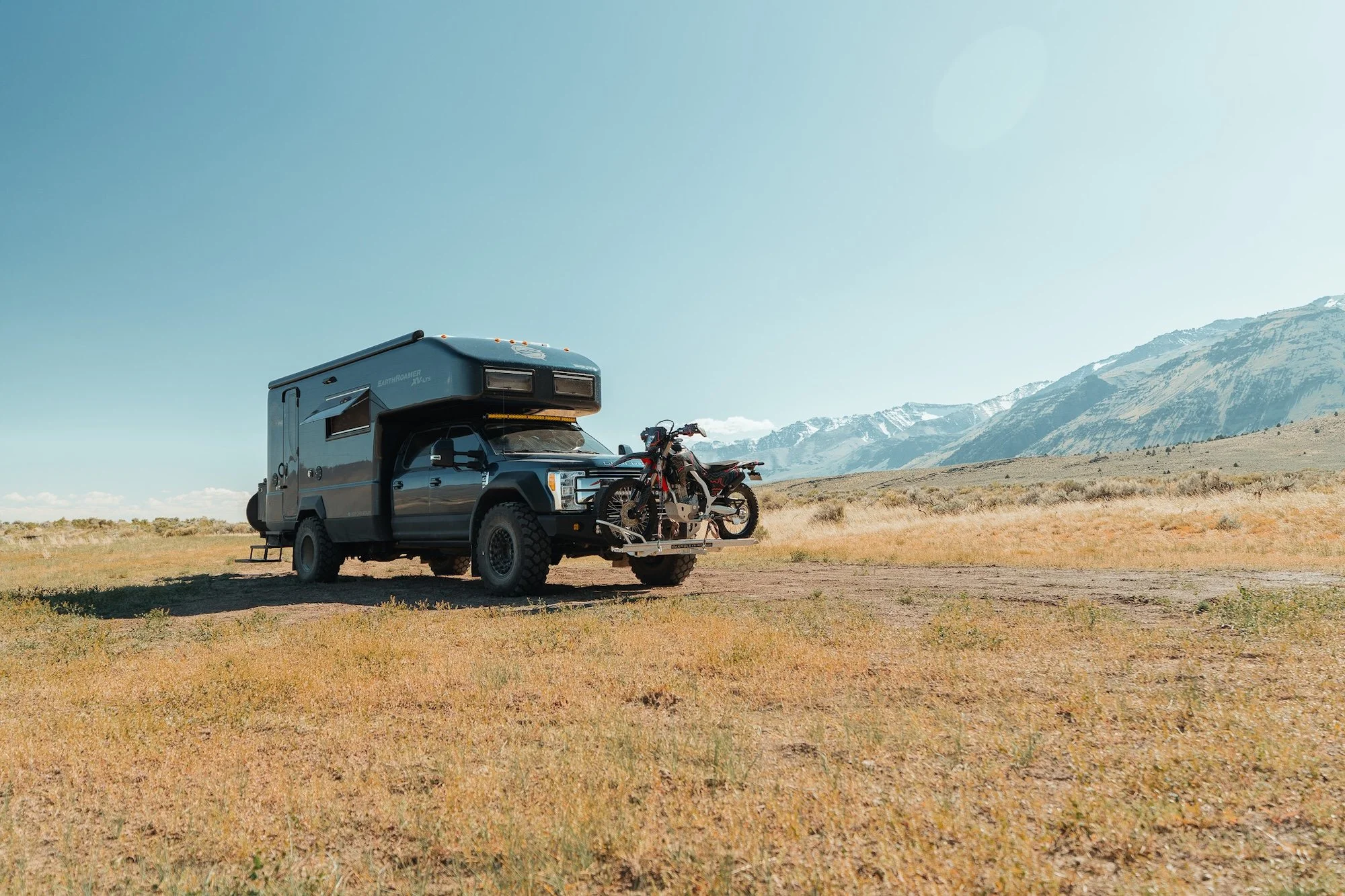
There's a moment that we always try to avoid in our travels. The sun is dropping, we've been driving longer than we meant to, and one of us looks at the other and says some version of:
"So... where are we actually sleeping tonight?"
After a year of living full-time in our EarthRoamer LTS, we've learned that finding a campsite isn't an easy part of this lifestyle. It's a skill. And when your home stands twelve and a half feet tall, and stretches nearly 35 feet long, it's a skill with a very specific set of rules.
A spot that looks perfect on a map can be completely off-limits the second a low branch, a soft shoulder, or a six-ton bridge gets involved.
So here's how we actually do it!
Plan With Absolute Uncertainty
One misconception about off-grid camping is that you either have everything booked months in advance or you're completely winging it.
We do neither.
Most days, we know roughly where we'd like to end up. We'll usually identify several potential campsites along our route and get a sense of what roads, fuel stops, and public lands are available nearby.
The difference is that we don't treat any of those camps as guaranteed.
One of the biggest advantages of traveling in an EarthRoamer is that we're self-sufficient. With plenty of fresh water, onboard power, and enough supplies to stay off-grid for days, we're not dependent on RV parks or developed campgrounds. Given the choice, we'd almost always rather spend the night beside a lake, on a quiet ridge, or down a remote dirt road than in a crowded campground.
That flexibility matters because conditions change constantly. Snow closes roads. Wildfires reroute travel plans. Popular dispersed camping areas fill up. A route that looks perfect on the map can end with a low bridge or a section of road that's simply not suitable for a 20,000-pound truck.
So instead of planning a single campsite, we plan options.
If we've learned anything from a year on the road, it's this: if you only have one camp picked out, you don't really have a plan—you have a hope.
The goal isn't to wander around hoping something appears. The goal is to know enough about the area that when Plan A falls apart, Plan B is already waiting.
The Apps We Use to Find Camp
People always ask what app we use to find campsites, expecting there to be a single, simple answer. For us, it’s more of an art than a science, but there are really two apps we always start with: onX Offroad and iOverlander.
onX Offroad is how we explore. It shows public land boundaries, forest roads, trail difficulty, satellite imagery, and terrain. When we're looking at an area we've never visited before, onX helps us answer questions like is there enough space for a vehicle our size? Are there potential camps near water or with a view? Are we on public lands?
Could Gaia do much of the same thing? Absolutely. We just prefer the way onX presents the information, especially when we're trying to quickly identify potential camps and understand what the surrounding area looks like.
iOverlander serves a different purpose. It's where we go when we want confirmation that a spot actually exists. Instead of studying maps and terrain, we're reading reports from people who have already been there. Is the campsite still accessible? Is there a gate? Is it crowded? Has someone recently stayed there in a larger rig?
What We Actually Look For in a Campsite
Not every dispersed campsite works for a vehicle this size.
Before committing to a spot, we're usually asking ourselves a few questions:
Is it reasonably level?
Can we turn around if we need to?
Are there any low branches?
Is the road surface firm enough for 20,000 pounds?
How far are we from other campers?
Is the tree cover too thick for starlink to work?
Water nearby or a stunning view on a vista is always a bonus.
Arrive Before Dark (Advice We Rarely Follow)
If we could consistently follow one piece of our own advice, it would be this:
Get to camp before dark.
But we’re not always great at following this advice. A four-hour drive somehow turns into seven because we stop for viewpoints, hikes, hot springs, mountain bike trails, or conversations with people we meet along the way.
The result is that we're often finding camp by headlamp instead of daylight. It works, but it's rarely ideal. The best version of ourselves starts looking for camp two hours before sunset.