

How We Manage Water on Multi-Day Off-Grid Trips
Before we started living in the EarthRoamer full-time, one of the things we wondered about was how long an 85-gallon water tank would actually last.
It sounds like a lot of water until you start thinking about everything you use it for. Drinking, cooking, dishes, showers, the dogs, the toilet, washing your face, brushing your teeth, and occasionally using the outside hose all come out of the same tank.
After more than a year on the road, we’ve gotten a pretty good feel for it. The longest we’ve gone between fresh water fills is about two weeks, although our sweet spot is closer to a week. When we fill the tank once a week, we’re using roughly 12 gallons of water per day between the two of us.
For some perspective, the average American uses about 82 gallons of water per day at home. For two people, that’s around 164 gallons a day. So even though we’re doing all the same basic things with our water, we’re using a fraction of what we would in a typical home.
Obviously, it isn’t a perfect apples-to-apples comparison. We aren’t watering a lawn, running a washing machine every few days, or filling a bathtub. Still, it’s a pretty good reminder of how little water we actually use while living in the EarthRoamer.
And we don't feel like we're living without water. We shower, cook, wash dishes, drink plenty of water, use the toilet, and keep the dogs supplied. We’ve just gotten a pretty good understanding of which things actually use up the tank.
Showers easily use the most water. The EarthRoamer has really good water pressure, which makes for a fantastic shower. It also means it’s very easy to use a lot of water without realizing it. So when we’re trying to stretch the tank, showers are the first thing to go. That doesn’t mean we stop showering for weeks (although we definitely don’t shower every day living in the EarthRoamer). Usually, we just pay more attention to how long we’re in there and turn the water off while we’re shampooing and doing things that don’t require the water to be running. Worst case, we’ll skip showering for a bit until we know we’re going to have a fill-up soon.
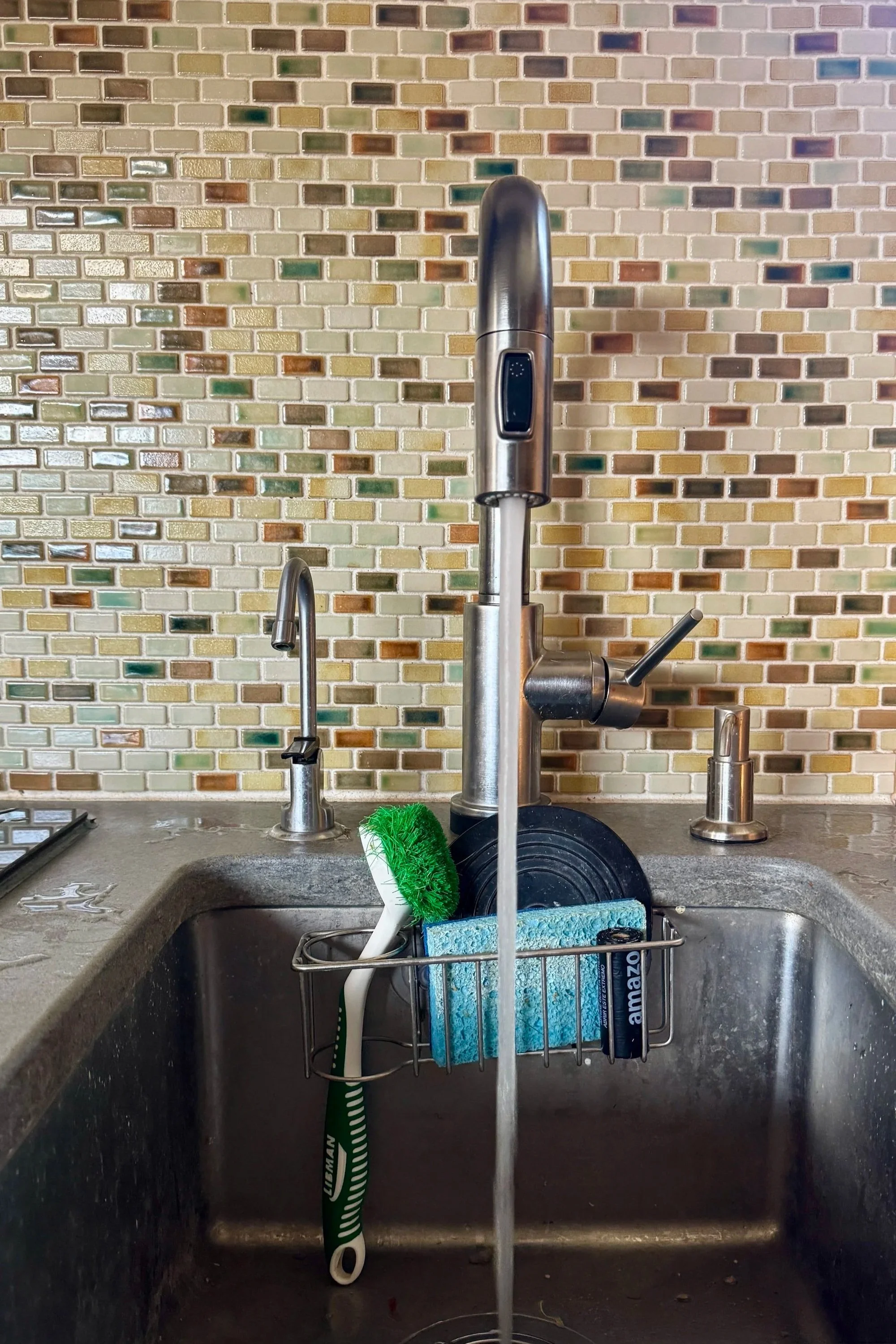
Dishes are another place where a small change makes a difference. At home, you might run the faucet while you wash and rinse everything. On the road, we’ve gotten into the habit of putting a big pot in the sink and doing the dishes over it. The water we use to wash and rinse the dishes ends up washing and rinsing the pot too, so we’re getting more use out of the same water.
There are some things we really don't worry about. Brushing our teeth and washing our faces don't use enough water to make much of a difference with an 85-gallon tank. Laundry is a different story. Clothes washing can use a lot of water, so when we're getting low, we start thinking about how much laundry we actually need to do. Sometimes that means rewearing something a few times if it’s clean enough.
Most of the time, though, we don't think much about our water level. Our water gauge has been pretty reliable, so we have a good idea of how much we've used and how much we have left. Once we get down around 30%, that's when we start paying closer attention.
At that point, we know we have plenty of water for the basics, but we also know we probably shouldn't be using it for things like washing bikes or hair washing showers.
We've never actually run out. Part of that is because we've learned how quickly we go through water, and part of it is because we pay attention to where our next fill is. Sometimes that means driving a little out of our way, but we've never had to make some massive detour just to find water. Apps like iOverlander make this much easier with their water-finding feature, so we can usually find a place to fill up somewhere along our route.
The nice thing about having done this for a while is that we know what a week of water looks like for us. We’re not trying to see how little water we can possibly use. We want to be comfortable, and that's one of the reasons we chose an EarthRoamer in the first place.
For us, managing water has mostly come down to knowing where the water goes, watching the gauge, and making a few adjustments when we're getting low. Once you've done it for a while, it becomes pretty intuitive.