

Lessons From Our First Year Living in an EarthRoamer
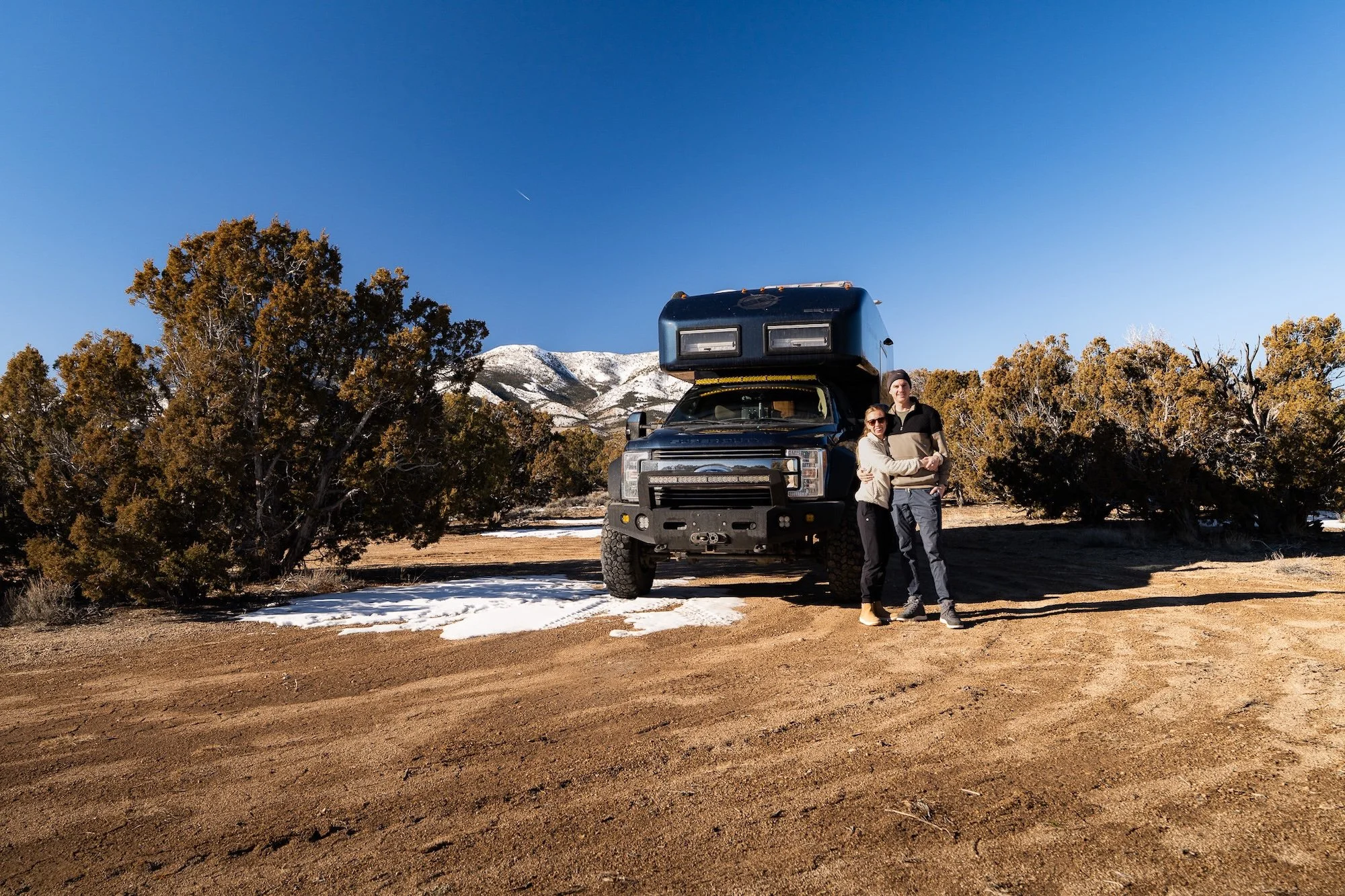
The new year means our introductory first year of EarthRoamering has officially come to a close. (Okay, technically it’s been nine months of ownership.) Still, what a year. A rollercoaster, in the truest sense. A few tears, a lot of laughter, unforgettable memories, and more lessons than we expected going in.
In the spirit of reflection, here are some of the biggest things we’ve learned this year on the road.
First: the EarthRoamer, like most people, is happiest when it’s about 70 degrees and sunny. Push past 80 and things start to heat up fast. The A/C works well, but in sustained heat—high 80s and 90s—unless you’re plugged into shore power, it can only keep up for a few hours at a time. On the flip side, too much rain or moisture brings its own challenges. Fans can only do so much, everything starts to feel damp, and certain components (like the toilet… learned that one the hard way) don’t love excess humidity. Cold weather is where the rig really shines, but that comes with a tradeoff too: weaker sun means solar doesn’t fully recharge. In winter, we’ve found we can usually get a day (maybe two if we’re lucky) before needing to drive to recharge. (Worth noting: this is much less of an issue in the new LTx thanks to the larger lithium system.)
Second: Google Maps is a liar. If it says ten hours, assume fourteen. Between slower speeds, rough roads, weather, stops, and sheer size, everything takes longer. Multiply your estimated drive times by about 1.5 if you want a plan that resembles reality.
Which leads to the next lesson: plan your trip, plan it again, then make a backup plan. And then a backup for that backup. Unless you’re a truly carefree, type-B, “let’s just see what happens” kind of person, trip planning will take up a huge amount of time but it’s what keeps small problems from turning into big ones. Campsites might not exist, roads might be washed out or inaccessible for a vehicle this size, and that perfect iOverlander pin you saved might already be occupied. Add in off-road routes that are actually appropriate for the EarthRoamer’s weight and dimensions, plus water fills, dump stations, and fuel planning… planning is necessary, but it’s not for the faint of heart.
Monitoring usage becomes second nature, eventually. Through trial and error, we’ve learned we can comfortably go about a week between dump stations, water refills, and grocery runs. Power takes more attention. Living in an EarthRoamer means constantly tracking fuel, solar input, battery levels, fresh water, gray water, and waste. It just takes time to adjust to the mental load of monitoring all the systems constantly.
Doing this alone would be incredibly hard. We rely on each other constantly. Jacob usually drives, and I spot. We’ve learned—sometimes the hard way—how critical clear communication is in high-stakes situations. We always say “driver’s side” or “passenger’s side” instead of left and right (because in the moment… some of us *ah-hem, me* forget which is which). Our walkie-talkies are among our most-used piece of gear, especially at night when backup cameras are basically useless. Even something as simple as having another person reroute after a wrong turn matters more than you’d think because unlike a car, you can’t always just pull over and regroup.
Things also break. A lot. And honestly, I don’t think that’s exclusive to EarthRoamer, it’s probably true of any vehicle being used this hard, this often, in this many environments. Components are exposed to dust, moisture, vibration, heat, cold… and used far beyond what most manufacturers probably imagine. Some nights the heater won’t turn on. This week the bathroom fan stopped spinning. Sometimes things magically fix themselves. Other times they don’t.
One non-negotiable rule we’ve learned: never drive stressed, tired, or distracted. Jacob is by far the most talented driver I’ve ever met, and unless you’ve spent extended time with him behind the wheel, you might not understand how driving is a talent, but I assure you, it is. But even Jacob, who is calm under pressure and knows how to drive in and out of extremely tricky situations, has trouble in a vehicle this big if he’s not mentally in the right headspace. This vehicle is tall, wide, and slow to turn and stop. And even when you think you’re focused, things still happen. We’ve hit things…more than once. It’s not an easy vehicle to drive.
And finally: embrace the highs and the lows. Extended EarthRoamer travel delivers both, in extreme doses. It’s not all golden-hour views and perfectly framed campsites. Sometimes it’s late, you’ve been searching for a place to sleep for hours, the grocery store parking lot is too small but you’re out of food, and it’s the only option for miles. But the highs are higher than anything we experience in traditional house living. Sleeping in places that don’t feel real. Waking up to views you didn’t know existed. Slowly building a deep, lived-in understanding of this country and the wildly different ways people move through it. That contrast—the hard moments and the incredible ones—is the whole thing.
Watch this week’s video to hear of 2025 stats and our favorite and most challenging stories.