

The Best Time to Visit National Parks: Our Advice
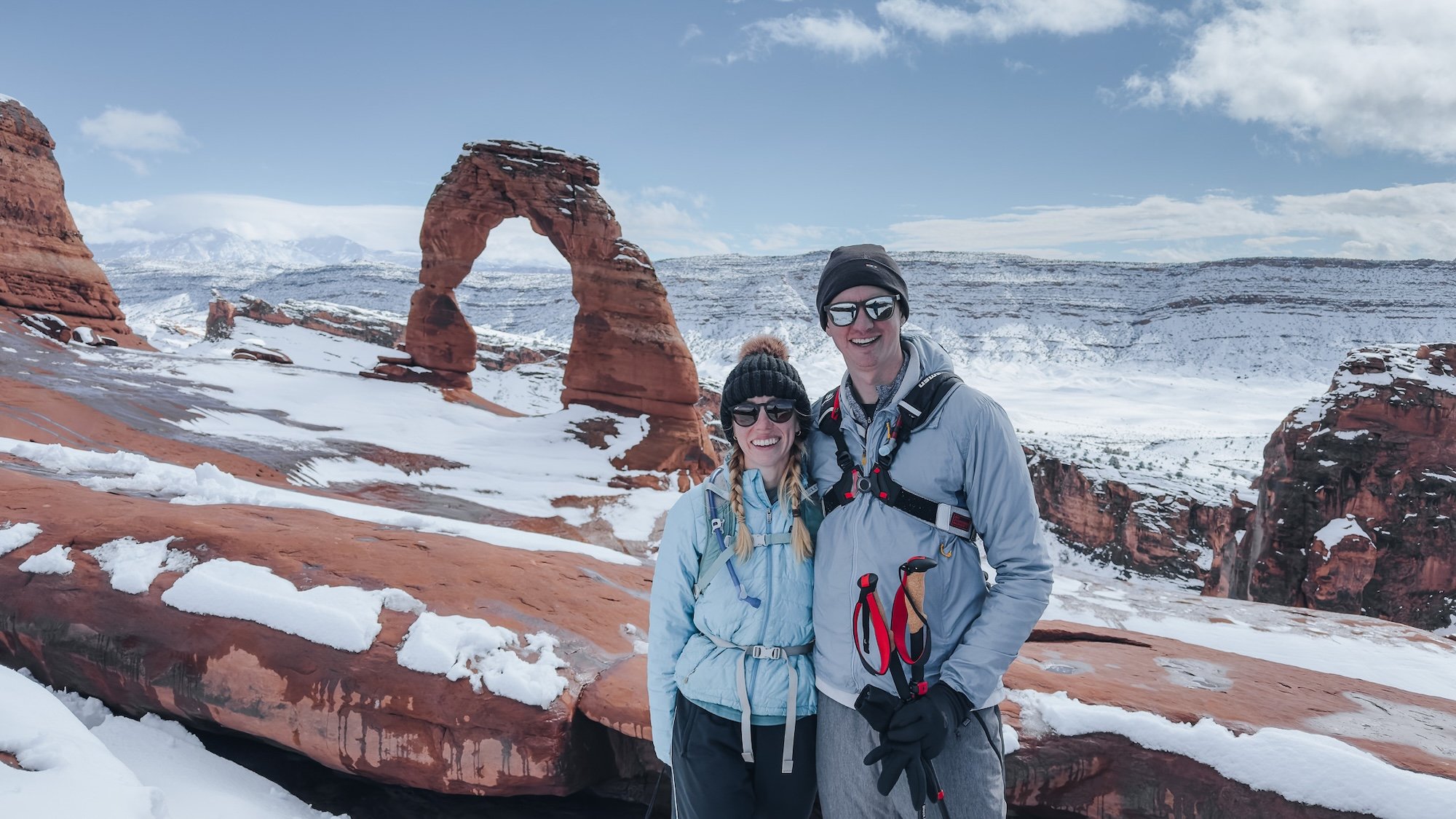
Visiting Arches National Park in the winter meant being able to see delicate arch in the snow and without any crowds!
We've visited national parks during both peak season and the off-season, and if you asked us when we'd rather go, we'd choose the off-season almost every time.
That might sound a little counterintuitive. Peak season is peak season for a reason. The weather is generally better, facilities are more likely to be open, and you have a better chance of getting the full experience a park has to offer. But after traveling full-time in our EarthRoamer, we've found that the time of year you visit can completely change what the experience feels like. And for the way we like to travel, fewer people usually make for a much better trip.
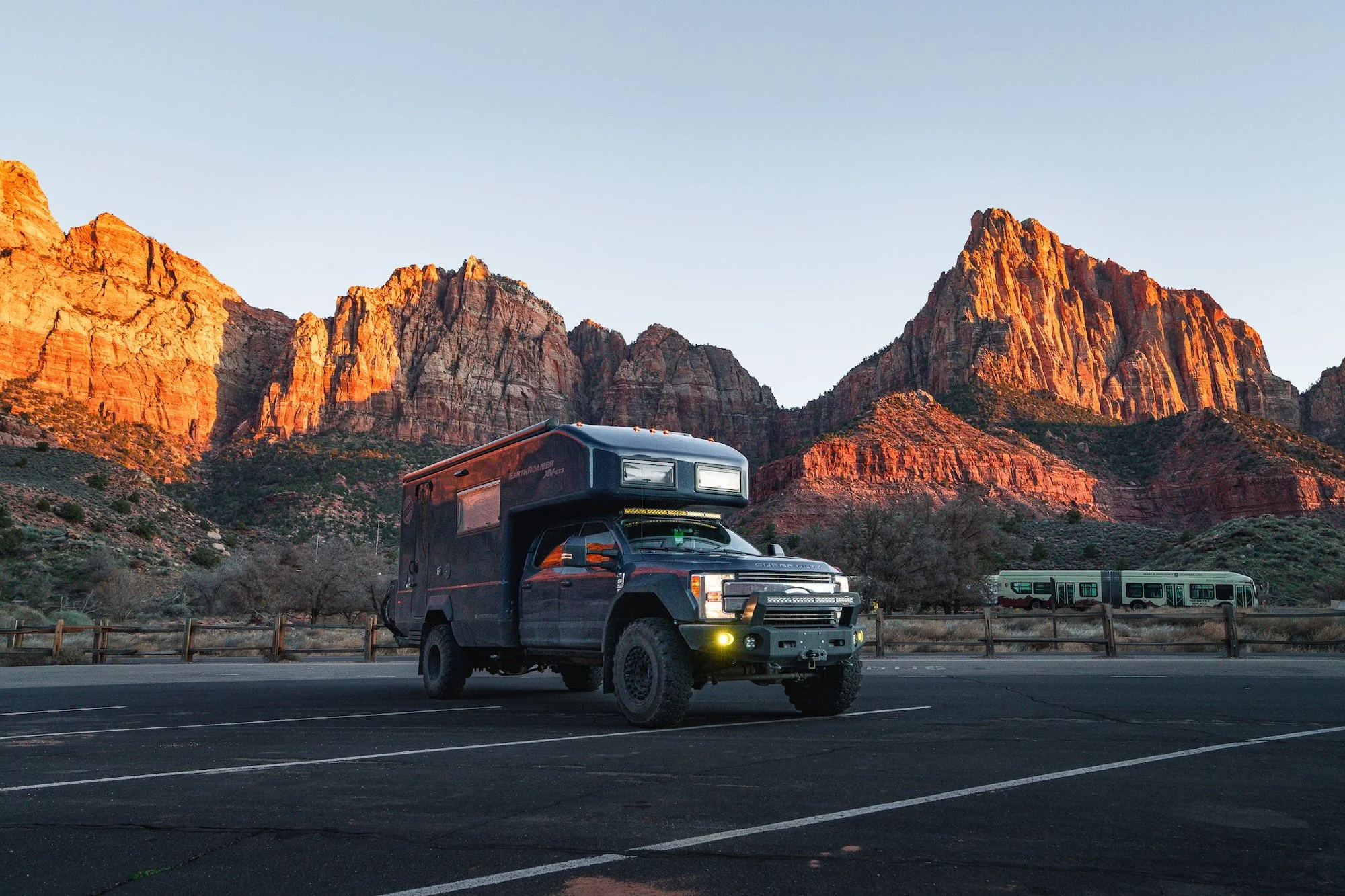
We visited Zion in the off-season. Highly recommend!
During peak season, the biggest challenge is often just getting to enjoy the place you've come to see. Popular parks can be incredibly crowded, parking lots fill up early, and some activities require reservations months in advance or involve a lottery. Even finding a campsite can take a lot of planning, especially if you're traveling in an RV. You might have the perfect hike or scenic drive in mind, only to discover that the parking lot is full or the experience you wanted to book has been sold out for weeks.
That doesn't mean visiting during peak season is a bad idea. In many ways, it's the easiest time to visit. Roads, visitor centers, campgrounds, and other facilities are more likely to be open, and warmer weather can make hiking and exploring more comfortable. If there's a campground inside the park, you can often reserve a site ahead of time, which gives you a place to stay and a solid starting point for your plans.
The trade-off is that you need to plan ahead, which can be tricky when you're traveling full-time. Things come up, routes change, and sometimes we end up staying somewhere longer than we expected or moving on sooner than planned. Having reservations locked in weeks or months ahead can make it harder to adjust as we go, and during peak season, changing plans can mean missing out on things entirely.
There's also the question of traveling with dogs. National parks have significant restrictions on where dogs can go, which means they often can't join us on the hikes and other activities we came to do. During hot weather, leaving them in the EarthRoamer becomes much more complicated. We have to consider the temperature, how long we'll be gone, and whether we can reliably keep the rig cool. That can limit what we feel comfortable doing, even when the park itself is somewhere we'd love to spend the entire day.
This is one of the reasons we gravitate toward the off-season.
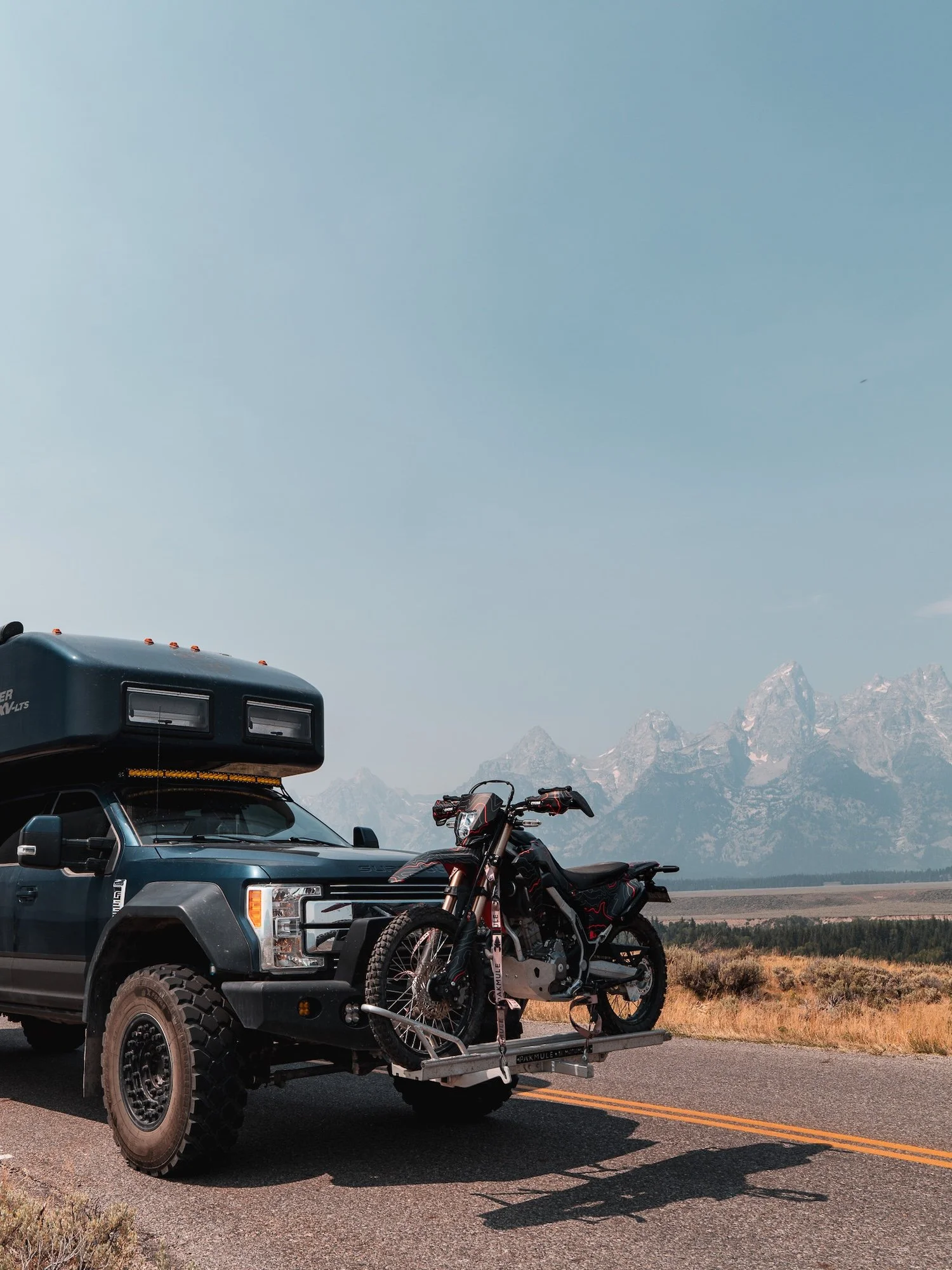
Grand Teton National Park in the summer (peak season) was nearly impossible to explore.
With fewer visitors around, the whole experience can feel different. You're less likely to spend your day looking for parking or working your way through a crowd at every viewpoint. You can take your time, stop when something catches your eye, and enjoy a place without feeling like you need to move along for the next person. Photography is easier, too, when you're not constantly waiting for people to clear out of your frame.
You can also experience a park in ways you might never see during the busier months. One of our favorite examples was visiting Arches National Park in the snow. It's already a spectacular place, but seeing those red rock formations covered in snow gave us a completely different perspective on the park. It was an experience we wouldn't have had if we'd planned our visit around the most popular time of year.
The off-season also fits our travel style because it leaves more room for spontaneity. We have a better chance of finding a campground spot or a dispersed campsite nearby without having everything reserved months ahead. Popular activities may have more availability, too, although that depends on the park and the specific activity. And when temperatures are cooler, traveling with the dogs is often easier because we have more options for keeping them comfortable while we're out exploring.
Of course, visiting in the off-season comes with its own complications. Some campgrounds, stores, visitor centers, and water fill-up locations may be closed or operating on reduced schedules. Certain roads and trails can close because of snow or other seasonal conditions, and weather can change your plans quickly.
That's why we wouldn't automatically recommend the off-season for every park or every trip. It depends on what you want to do, what conditions you're comfortable with, and how much flexibility you have. Before heading out, we'd check seasonal road closures, campground availability, weather, and any activities that are especially important to us. We also make sure we know where we'll get water and supplies, since those can be harder to find when fewer places are open.
If you do decide to visit during peak season, our biggest piece of advice is to plan around the crowds rather than assume you'll be able to work around them once you arrive.
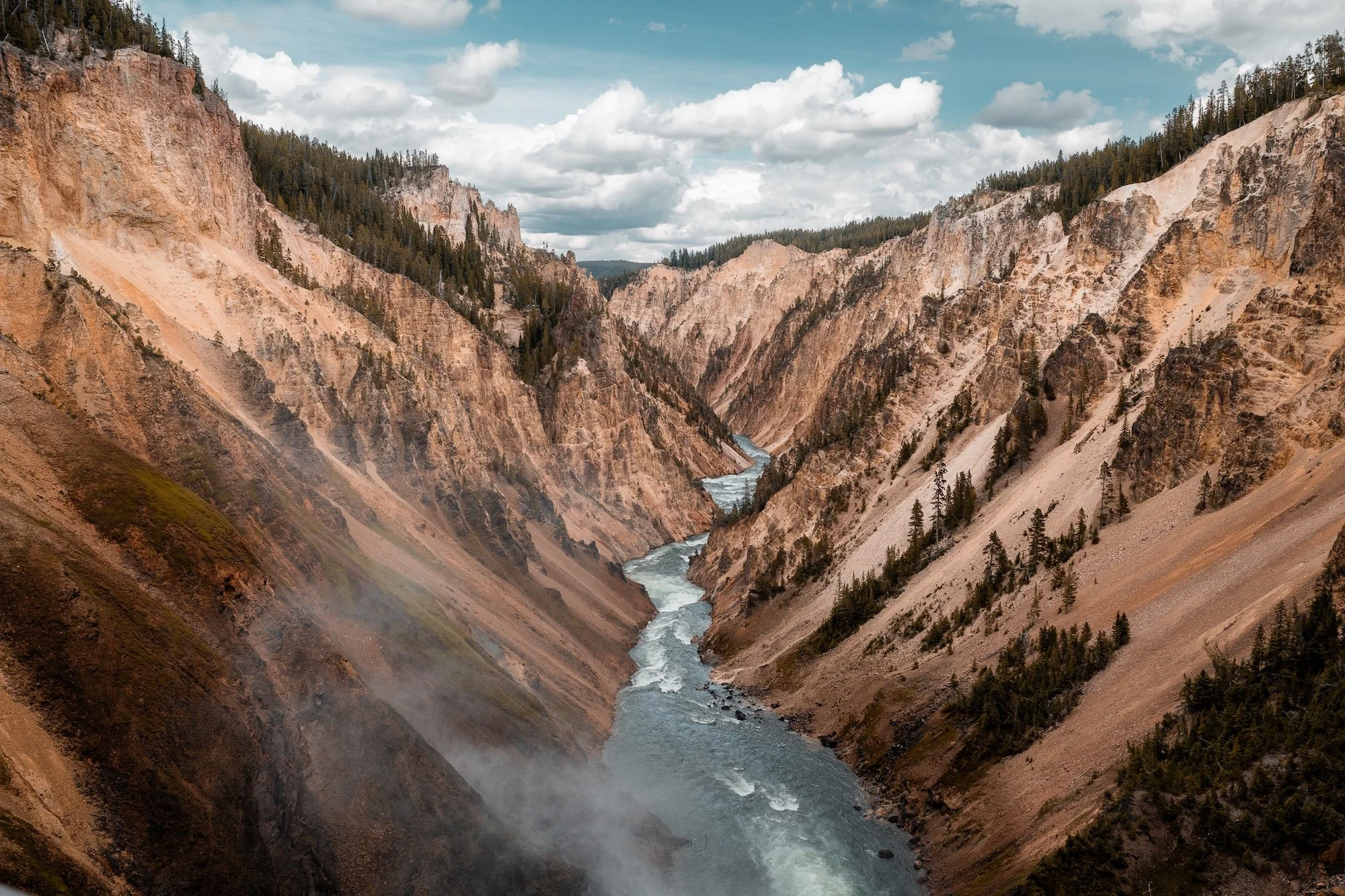
Despite visiting Yellowstone briefly during peak season, we were still able to capture this epic photo. We just had to park further away and walk awhile.
For us, that might mean staying at an RV park where we can plug in and run the air conditioning for the dogs. From there, we'd find another way to get around, which would also alleviate the extra layer of complication of trying to find spaces big enough to park the EarthRoamer. Depending on the park, that could mean renting a car, bringing e-bikes, or using another vehicle to avoid having to find parking at every stop.
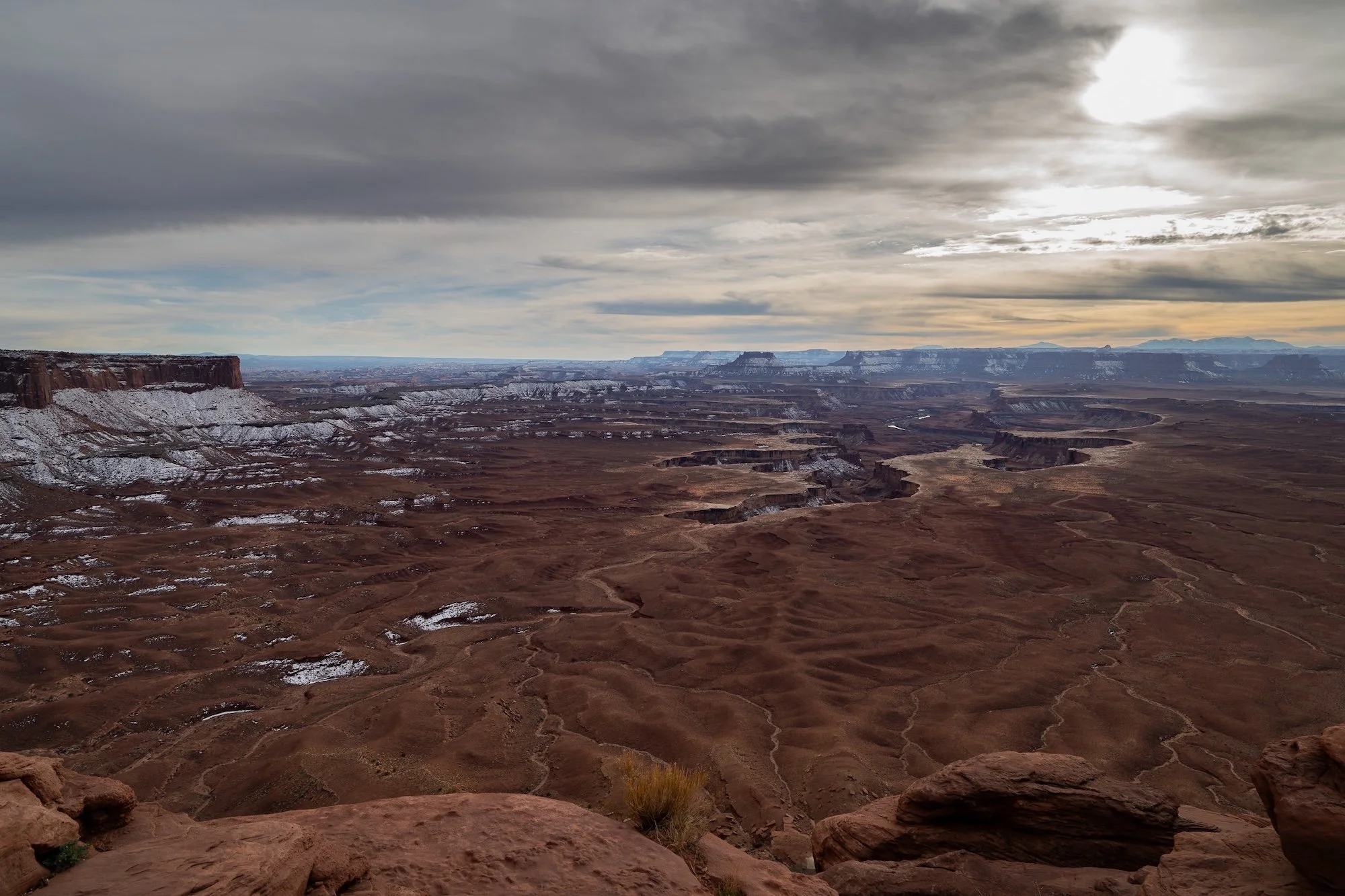
Canyonlands during off-season in the snow
We have a motorcycle, which can be a convenient way to get around without moving the EarthRoamer or worrying about where to park a much larger vehicle. It's not ideal for every destination, though. If we're planning a day of hiking, wearing motorcycle jackets and riding pants isn't exactly what we want to be doing on the trail, and changing in a parking lot isn't always convenient. The best option depends on what you want to do once you're there.
We'd also make reservations as early as possible and build the trip around the activities we care about most. If there's a popular hike, tour, or other experience we really don't want to miss, we'd figure out its reservation requirements before we go. We'd be realistic about how much we can fit into a day and have a backup plan for the things we can't book.
For us, the off-season usually wins. We like being able to take our time, find a campsite without months of planning, and see familiar places under conditions that make them feel entirely new. We're happy to work around a little unpredictable weather for that kind of experience.
If you're deciding when to visit a particular park, we'd start by figuring out what you most want to do there. Then look at when those activities are available, what the weather is likely to be like, and how busy the park gets. The best time to go is the time that lets you experience the park the way you want to, whether that's a sunny summer hike or a quiet winter morning with snow on the red rocks.
