

Eastern Sierra Magic: Our Favorite Stops Along California's Highway 395
We've said it before and we'll keep saying it: Highway 395 doesn't get nearly enough credit. Most people know it as the road that runs along the eastern edge of the Sierra Nevada, somewhere between the Nevada border and the California coast. But after driving the full corridor from Central Oregon down to Southern Arizona in our EarthRoamer, we can tell you without hesitation that the California stretch — the Eastern Sierra — is the part that stuck with us the longest.
It's not one destination. It's a whole string of them, strung together like they were placed there specifically for people who like driving slowly and stopping often. Ghost towns, mountain passes with wildflower explosions, turquoise glacier lakes, and dispersed campsites that feel like they were designed for a rig exactly like ours. If you're planning a 395 run and you're only giving California a passing glance, you're leaving the best stuff on the table. Here's where we actually stopped, what we actually thought, and what we'd do differently next time.
Alabama Hills — Movie Road, Sunset Light, and the Most Iconic Rocks in the West
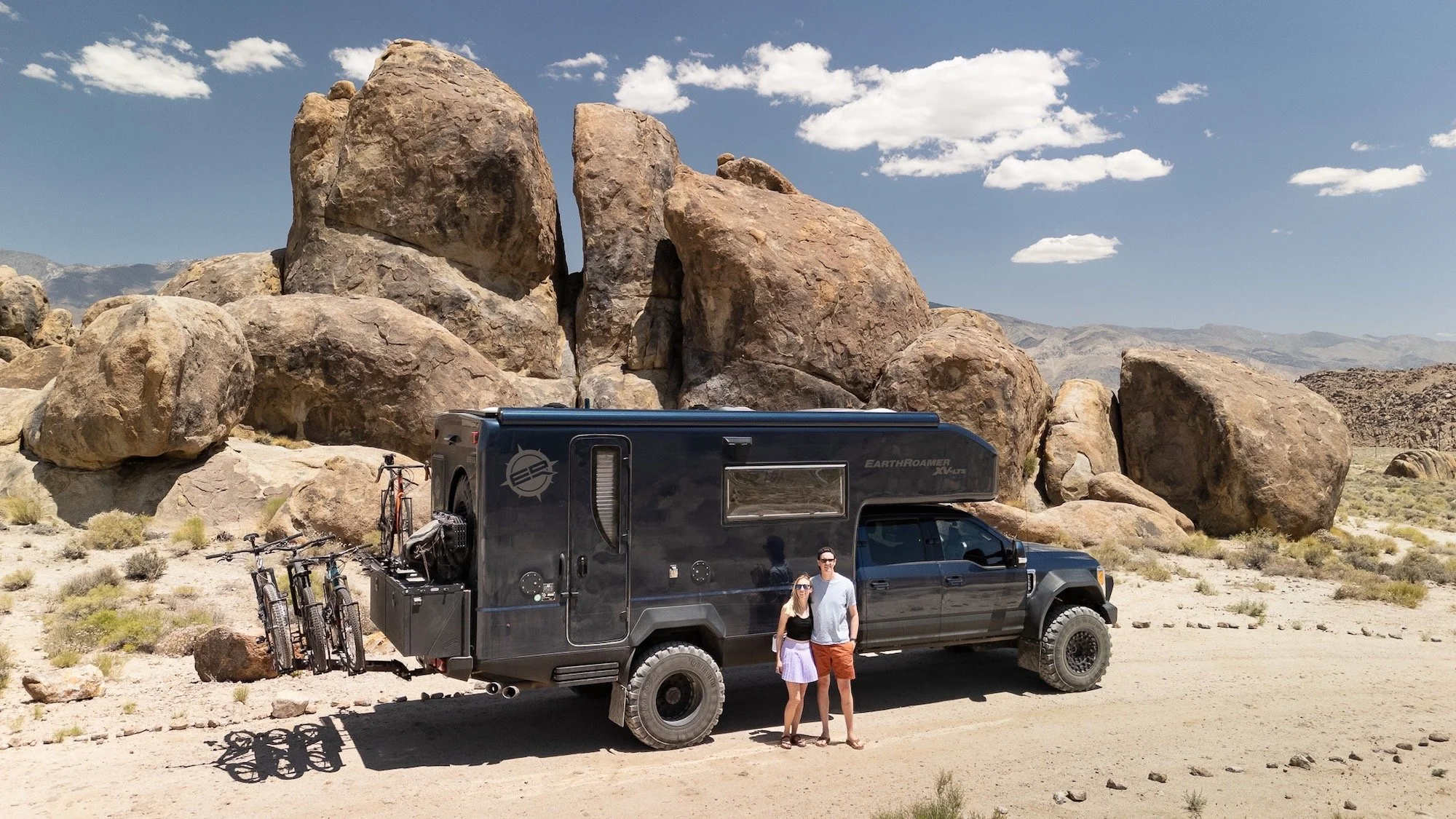
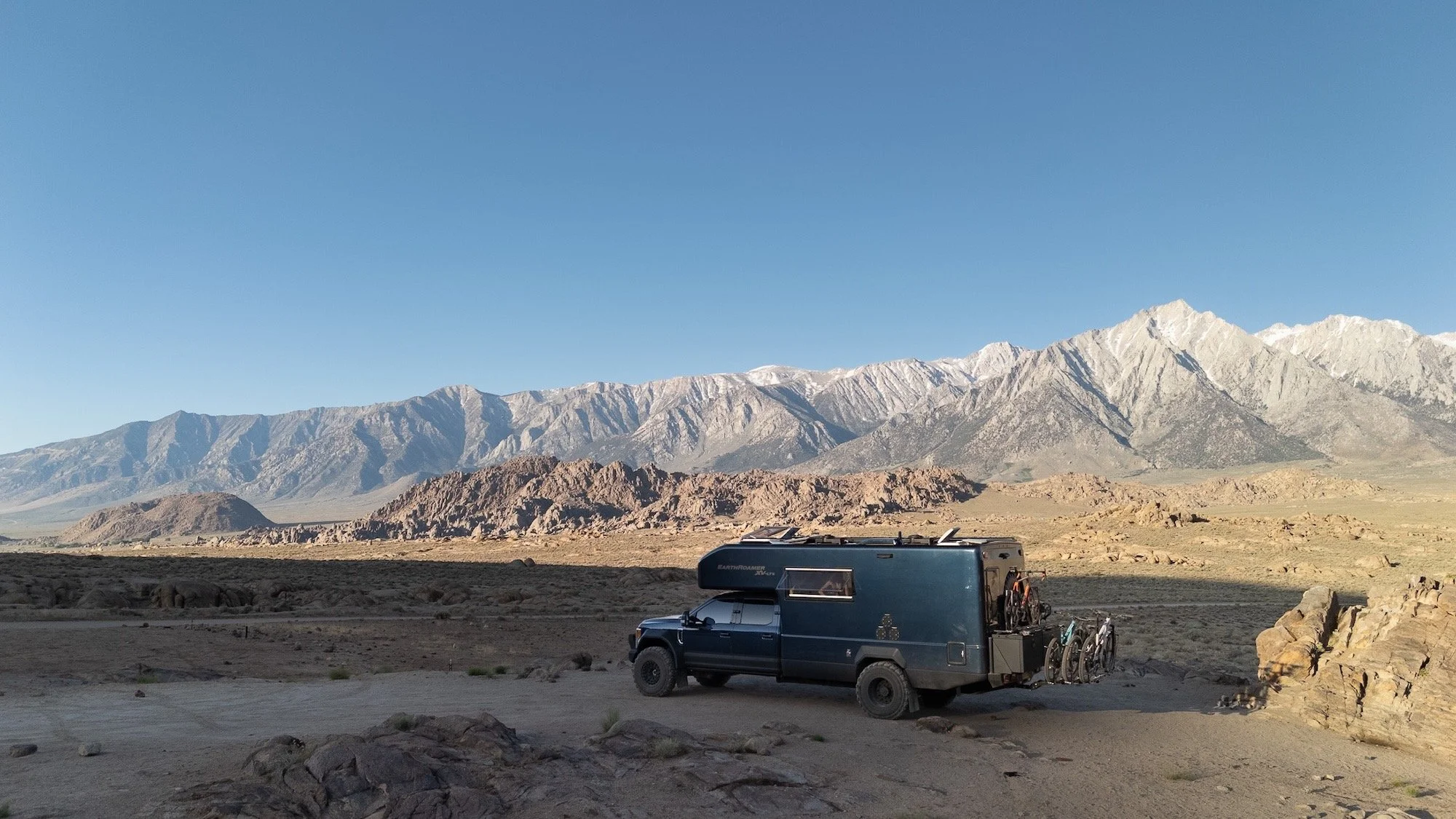
If you've driven Highway 395 through Lone Pine and kept going without stopping at the Alabama Hills, we need to have a talk. This place has been photographed from every angle, used as the backdrop for hundreds of Western films, and still somehow manages to feel like a discovery when you roll in for the first time.
We camped along Movie Road, which winds through the heart of the boulders and puts you right in the middle of the landscape instead of looking at it from a parking lot. The camping here is dispersed and free, managed by the BLM, and there are dozens of pullouts ranging from wide-open flats to more tucked-away spots between the rocks. Finding a spot is a little chaotic in the late afternoon when the light is dropping. The signage isn't exactly easy to read for where you can and can’t camp, and we made a wrong turn or two before settling in. But once we did, we were absolutely rewarded. For less of a hunt, we suggest rolling in earlier in the afternoon.
Bodie Ghost Town — Where the Gold Rush Ran Out of Steam
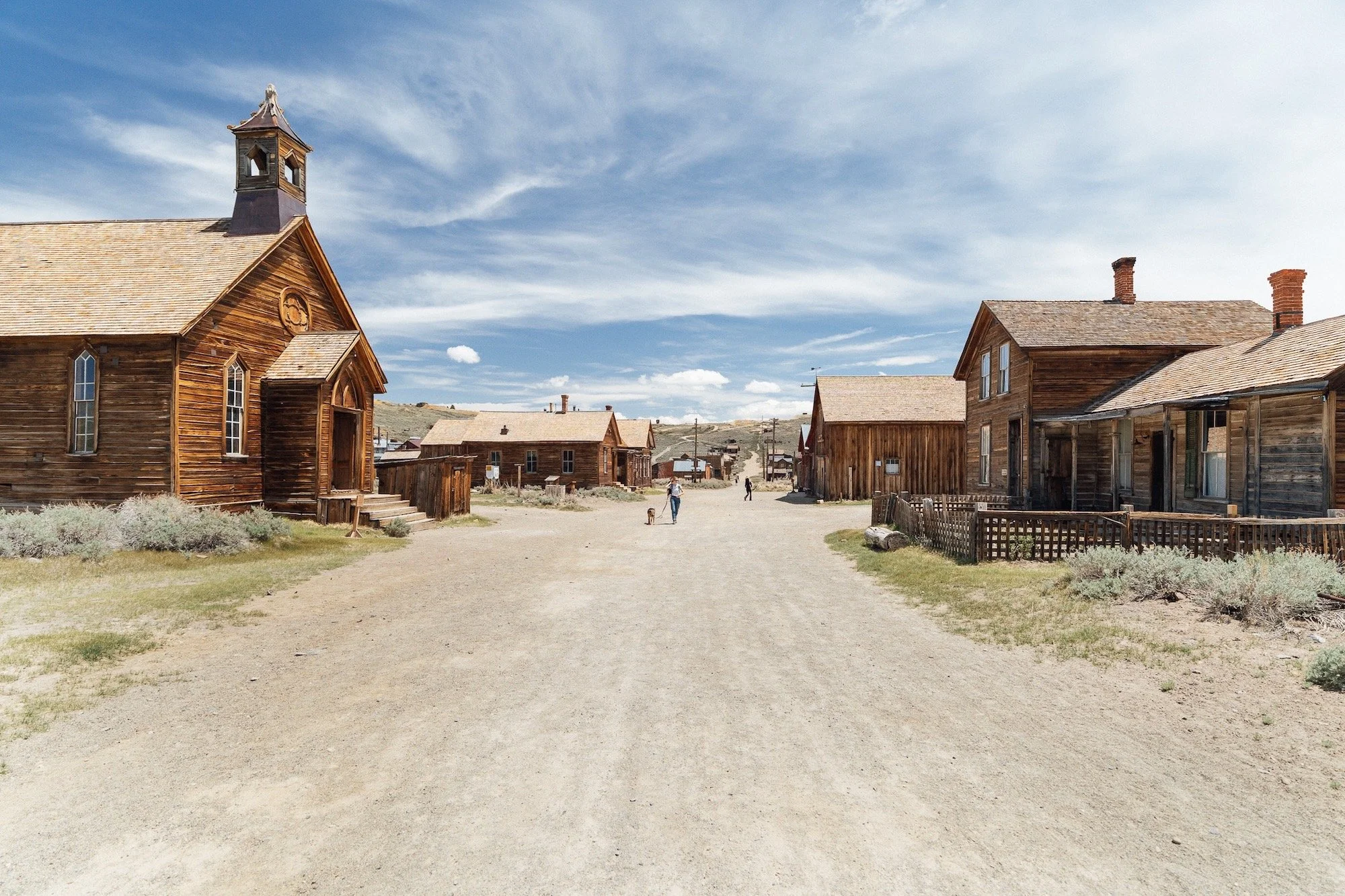
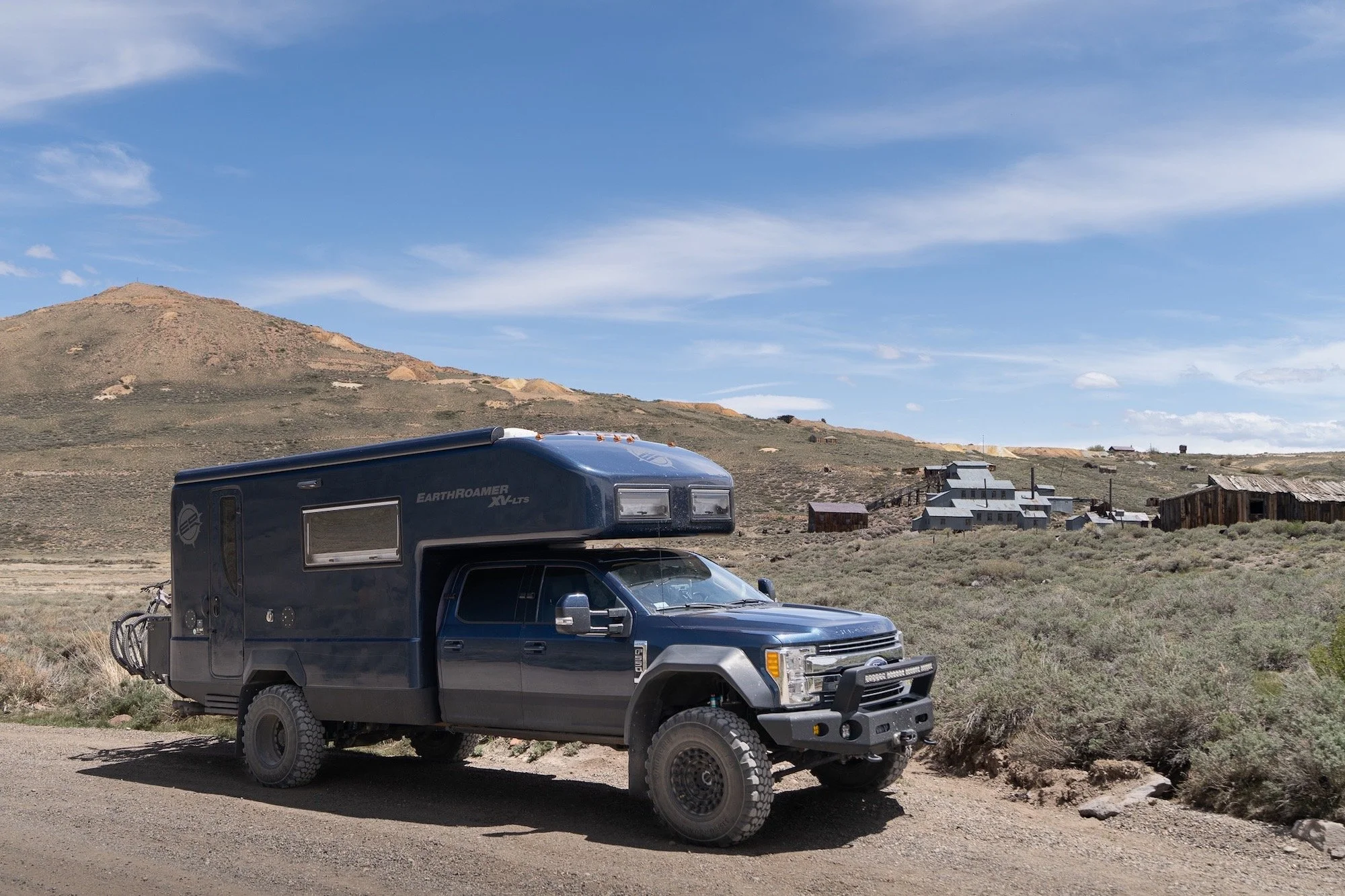
Bodie is a genuine, unrestored ghost town sitting at 8,375 feet on a windswept plateau east of Highway 395. At its peak in the late 1800s, it had a population of nearly 10,000 people. By the time the gold ran out, almost everyone left. What remained has been in a state of arrested decay ever since — maintained but not restored, which means the buildings look exactly as they were left, just slowly falling apart under the high desert sun.
We explored it on our own, wandering from building to building, reading plaques, and peering through dusty windows at furniture and belongings that have sat untouched for over a century. It's genuinely eerie in the best way. If you're a history lover, budget at least two hours here — there's more to see than you'd expect. And if you can do the guided tour, do it. We didn't on this trip and we already know we'll fix that next time. There's an entrance fee, which goes toward staffing and maintenance.
Monitor Pass — The Drive We Didn't Want to End
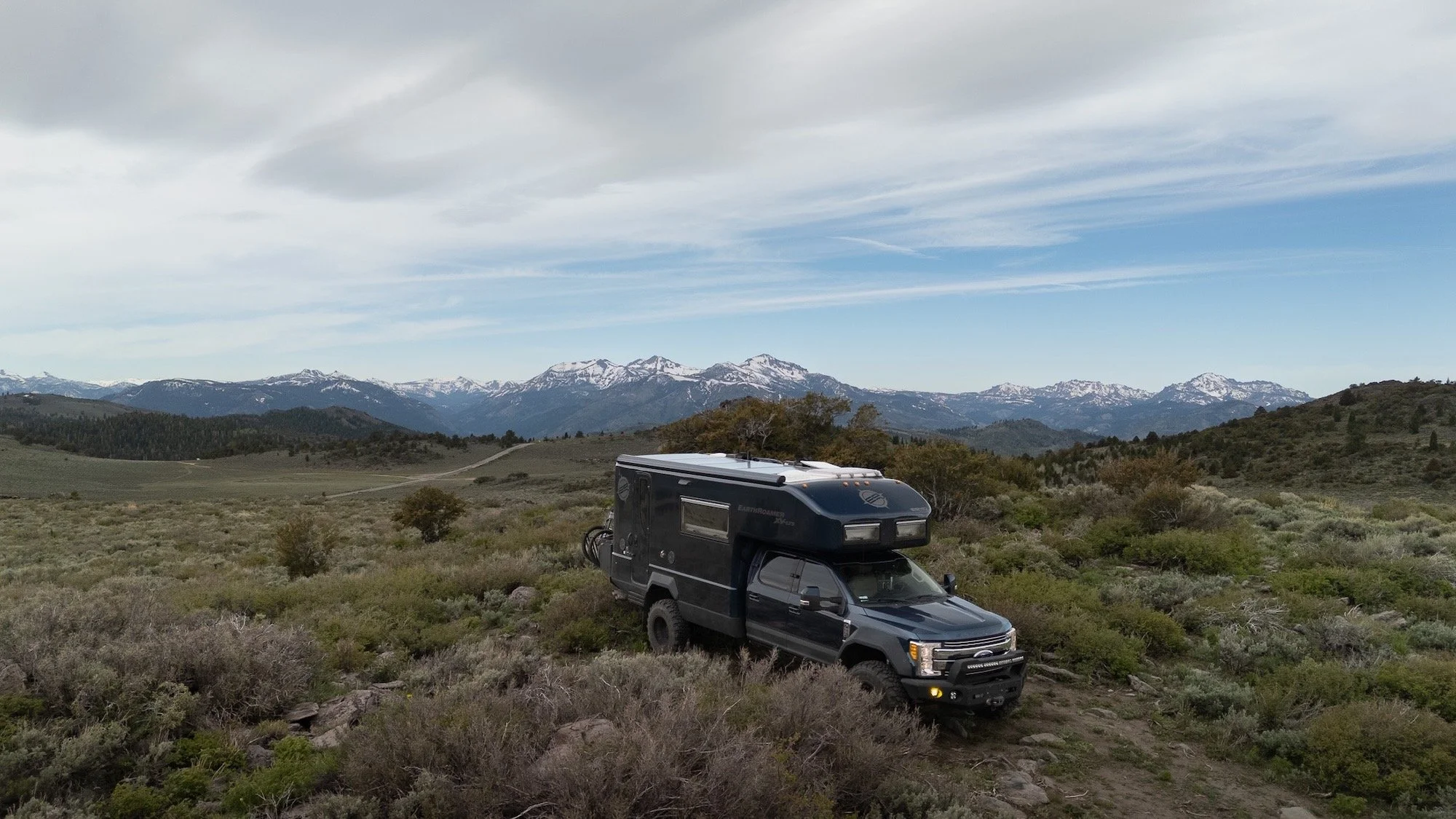
Monitor Pass (Highway 89) crosses the Sierra Nevada between Markleeville and Bridgeport, topping out at 8,314 feet. When we drove it in summer, the wildflowers were absolutely relentless — carpets of color running up the hillsides on both sides of the road while snowcapped peaks sat in the distance. The road is smooth and winding with sweeping views at almost every turn, and because it's not on the 395 itself, the traffic was almost nonexistent.
We drove slow. We stopped at every pullout. We took photos that still don't do it justice. We didn't want it to end, and when it did, we seriously considered turning around and doing it again. If you're running the 395 corridor and Monitor Pass is open (it closes in winter and sometimes into spring), it's worth adding the extra miles.
Grover Hot Springs Dispersed Camp — Our Favorite Site on the Whole Route
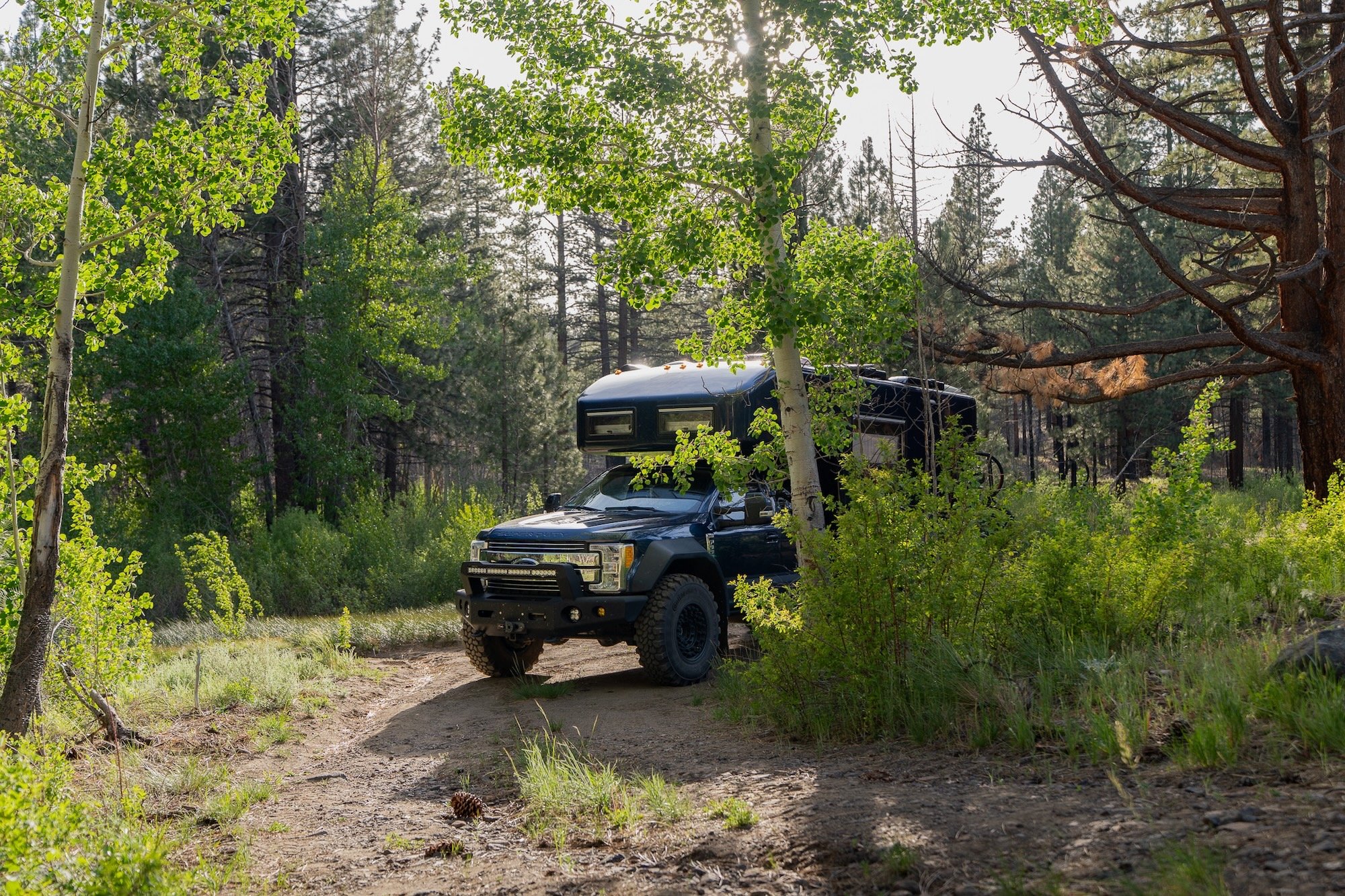
Just outside of Markleeville, before you push south toward Bridgeport, there's a quiet pullout spot we found along a creek with a grassy field that's become our gold standard for what a dispersed campsite should feel like. This is not Grover Hot Springs State Park — that's a paid facility nearby with developed pools and reservable sites. The dispersed camp we're talking about is a BLM pullout just outside the park boundary. It's right on the water, the grass is soft enough to actually sit on, and it's the kind of place that only works if your vehicle can handle the short, rocky trail to get in.
Convict Lake — The One We Want to Come Back To
We stopped at Convict Lake early in the season, and honestly, the timing wasn't ideal — the water was still too cold to paddle and the surrounding trails were patchy with late snow. But even an underperforming visit to Convict Lake is still a very good visit. The lake sits in a carved glacial bowl surrounded by steep, jagged peaks, and the color of the water is that specific blue-green that makes you assume the photos are edited when they're not. It's genuinely that color.
We walked the shoreline with the dogs and got back on the road feeling like we'd underinvested in this stop. If you're coming through in late summer, budget a full day — kayaking, hiking, and a picnic dinner sounds like an ideal 395 layover.
Leavitt Falls Overlook — Worth the Winding Climb
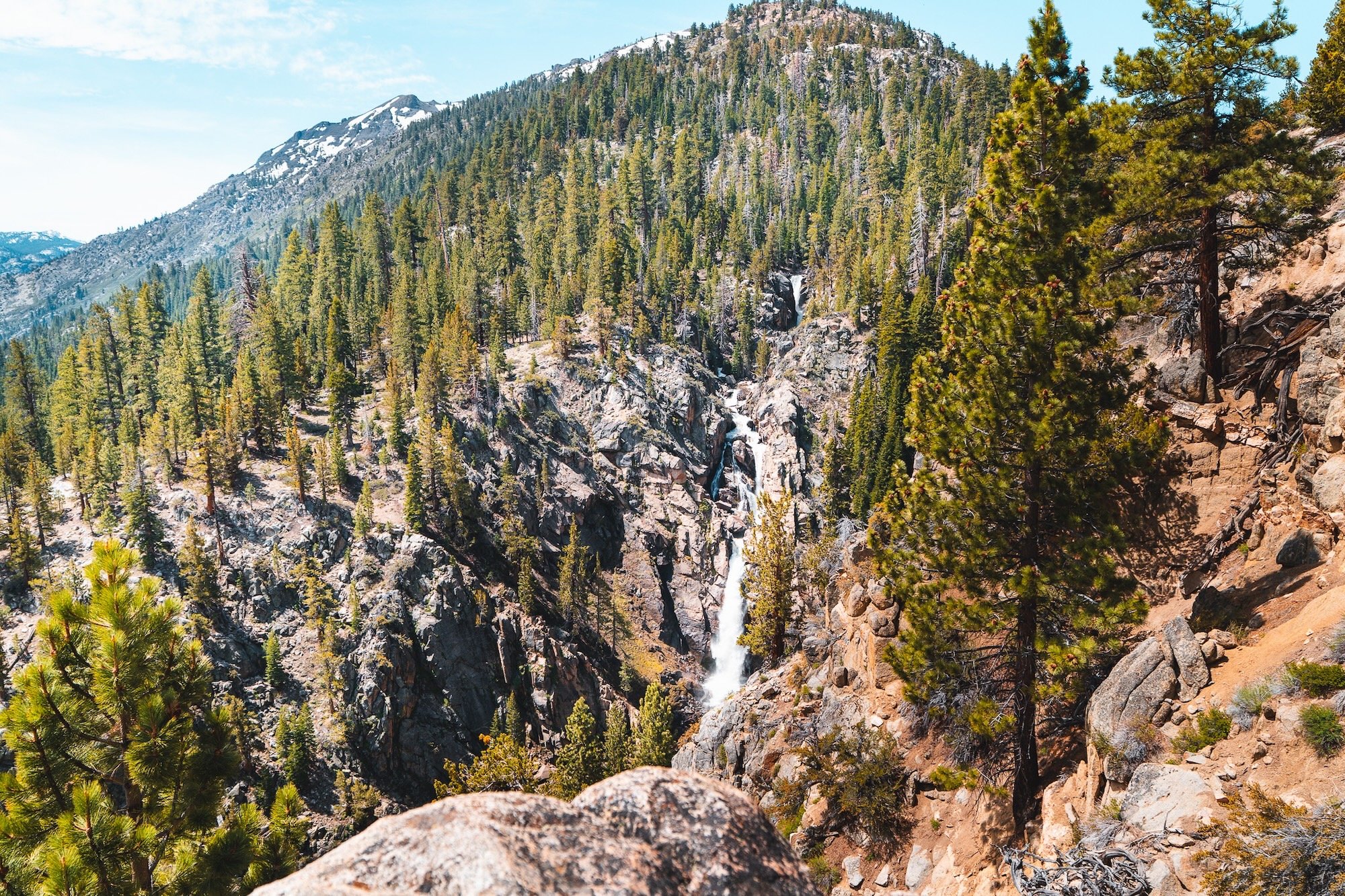
South of Bridgeport on the 395, a sign for Leavitt Falls points you off the highway and up a winding, scenic side road that climbs through juniper and sagebrush before opening up to a viewpoint above the falls. The waterfall drops roughly 200 feet into the canyon below. The drive up is beautiful in its own right — switchbacks and canyon views with the kind of emptiness that reminds you how big the interior West actually is. It's not a long detour from the 395, and if your timeline is flexible it's the kind of spontaneous stop that makes a road trip feel like a road trip.
The Eastern Sierra Was Made for This Life
Here's what the California stretch of 395 does that most corridors don't: it gives you something genuinely worth stopping for every thirty to fifty miles. Not a gas station or a viewpoint turnout, but a real destination — a ghost town, a mountain pass, a lake that looks fake, a campsite on a creek that you'll tell people about for years. We drove this in our EarthRoamer and it was exactly the kind of road the rig was built for.