

We Pushed Deeper Into the Owyhee Discovery Trail. Was It Worth the Risk?
Most people look at Leslie Gulch on a map and stop right there. It's too far from gas, too far from cell service, and too far from a tow truck if things go sideways.
We looked at it and thought: that's exactly the point.
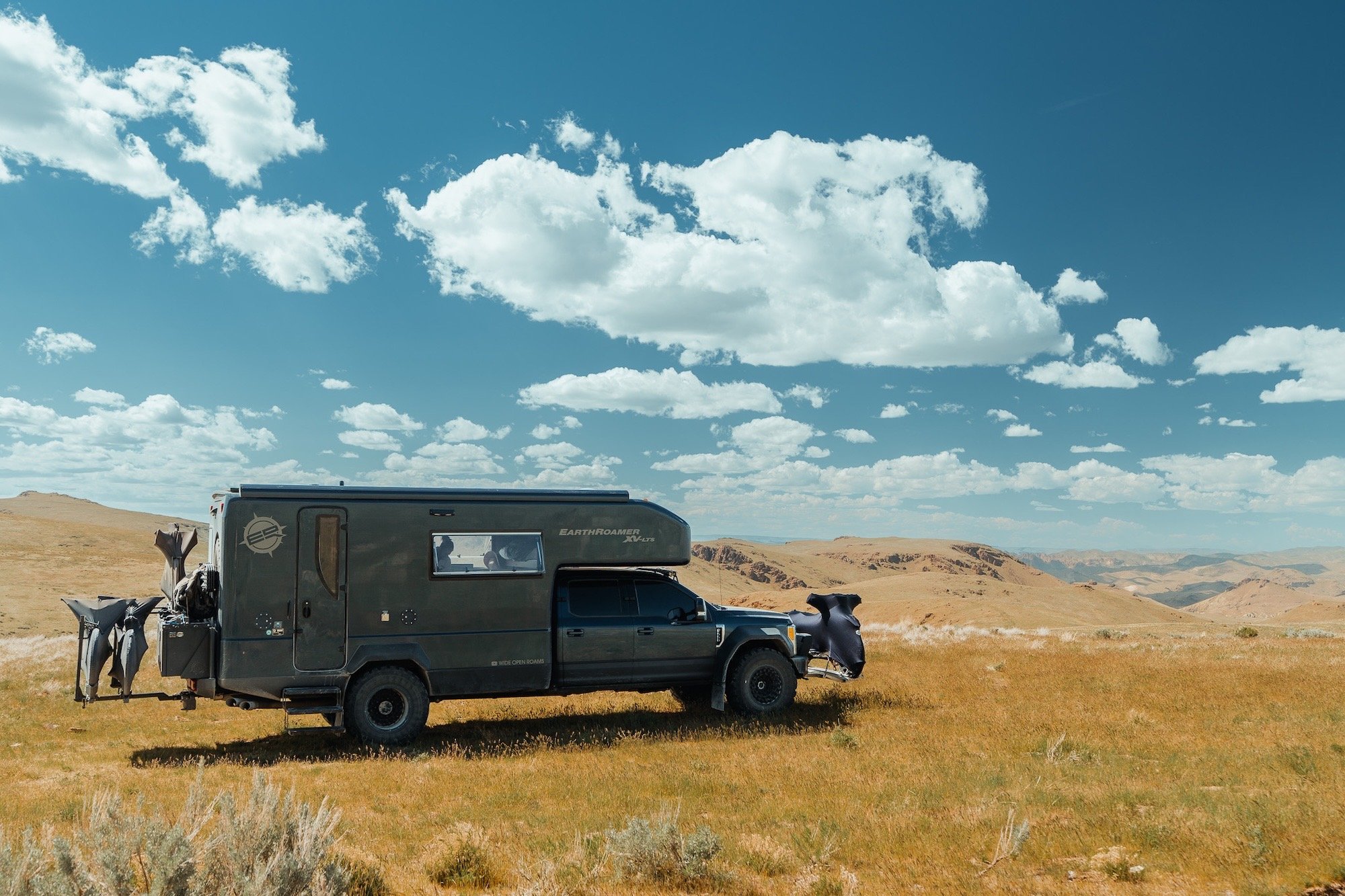
But there's a difference between knowing something is remote and feeling it. The Owyhee Canyonlands are one of the last great unprotected wilderness areas in the continental U.S. — no national park designation, no visitor center, no ranger station to bail you out. What you bring is what you have. And when you're driving an EarthRoamer on trails cut for Jeeps, that equation gets real fast.
The Route We Took
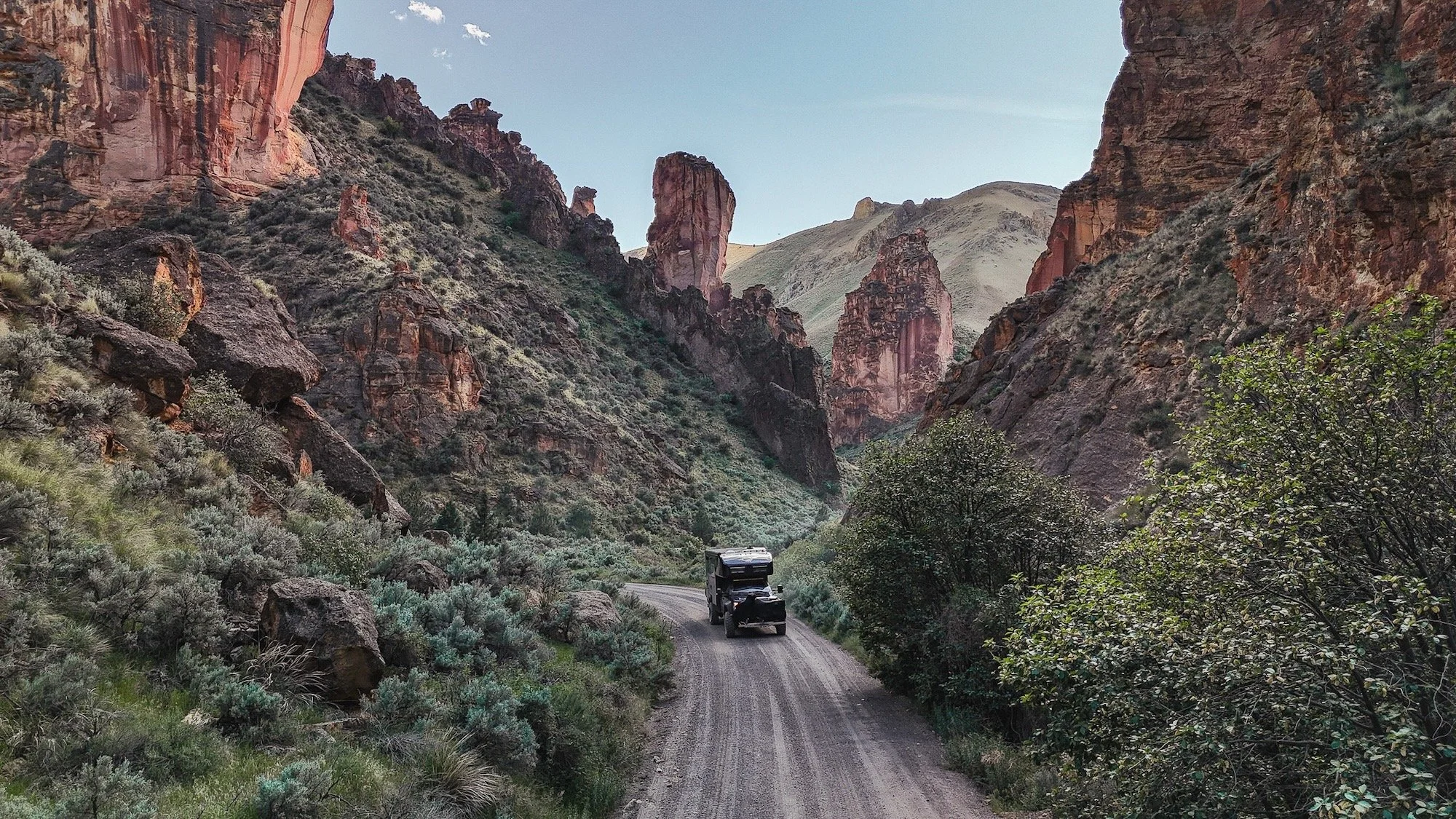
We entered via the Leslie Gulch road, camped on a ridgeline the first night, dropped down to Lake Owyhee the next morning, then pushed deeper on a rough double-track jeep route that winds further into the backcountry. Total distance from the last fuel stop: roughly 80 miles round-trip on graded dirt, then another 20+ on unmaintained trail.
The Fuel Math
There is exactly one fuel station within striking distance, and it's not a guarantee. We topped off there before entering. For anyone considering this route: do not count on gas anywhere between that station and the trailhead. Our EarthRoamer carries roughly 90 gallons of diesel, which gave us comfortable range — but if you're in a standard overland rig with a 25-gallon tank, you need to plan fuel stops accordingly and consider carrying a rotopax reserve.
Where We Camped (And the Boat Ramp Hack)
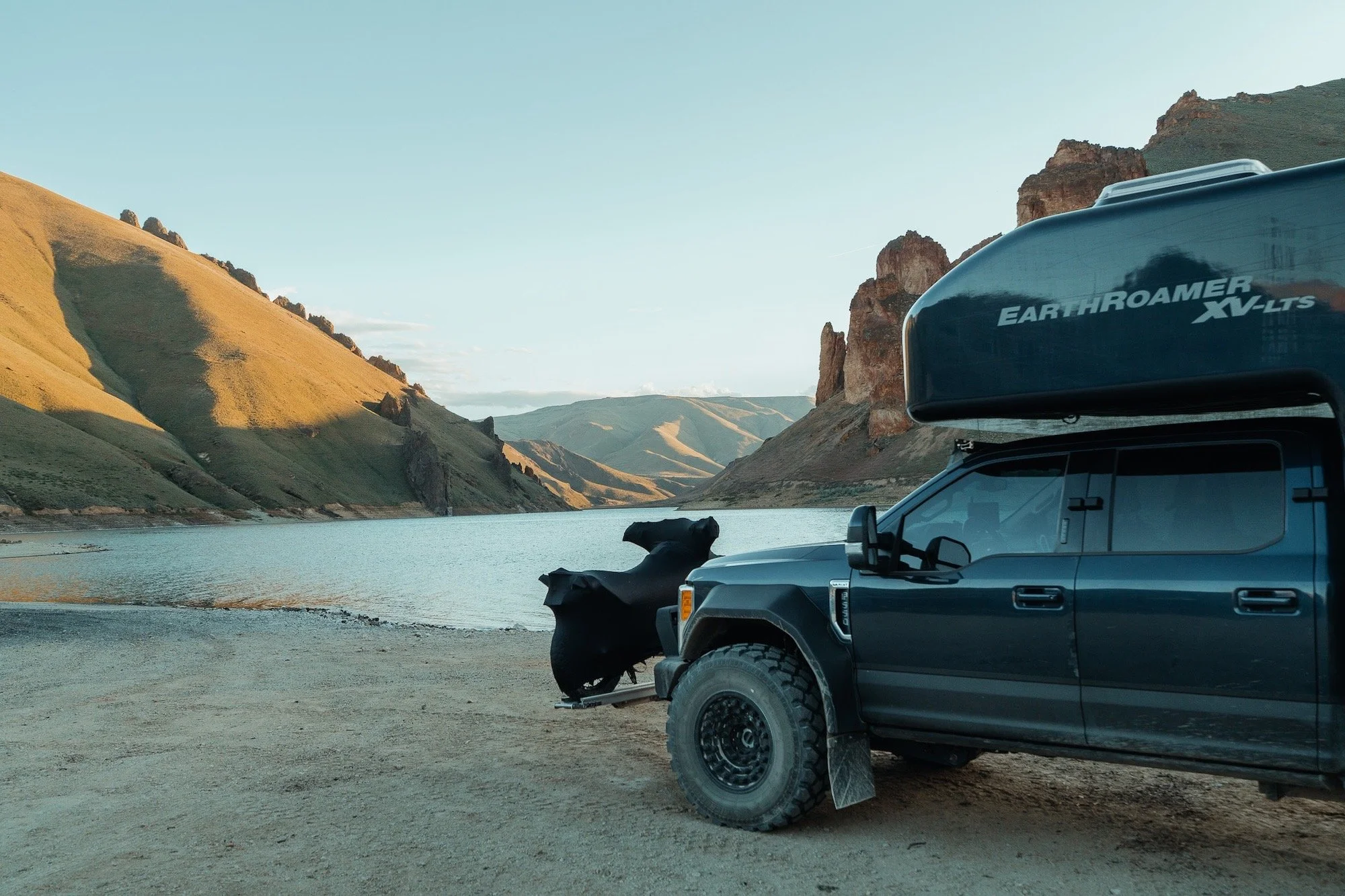
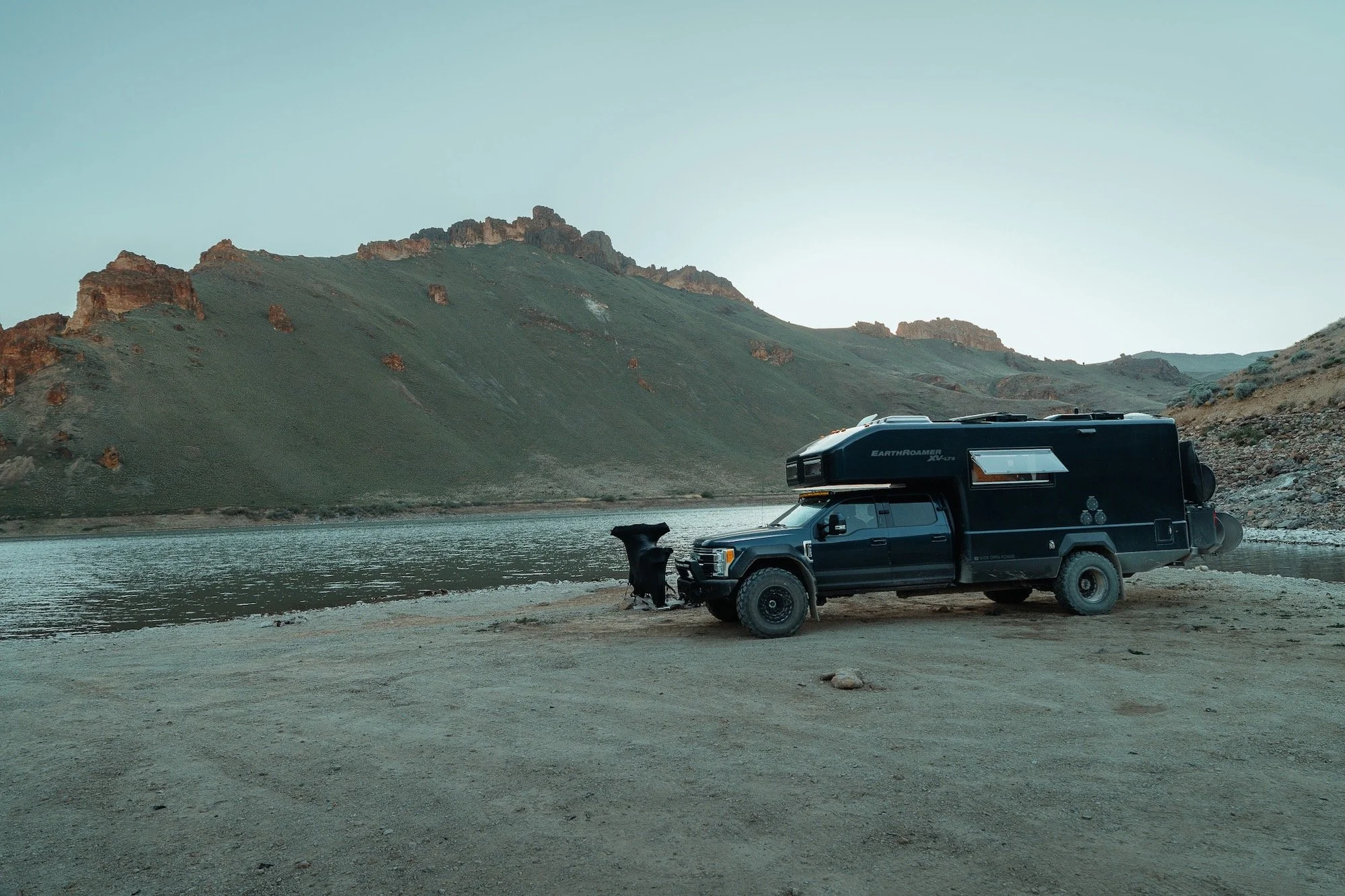
The designated campsite at Lake Owyhee was full when we arrived. The dispersed options looked sketchy — steep, loose approaches with deep ruts and tight turns. We nearly committed to a sketchy spot before spotting the boat ramp. Smooth grade, plenty of space, right on the water. If you're in a larger rig and the main sites are taken, check the boat ramp 🙂
Trail Width vs. EarthRoamer Width: The Real Risk
The Discovery Trail is cut for Jeeps, not expedition vehicles. The critical difference isn't horsepower or clearance, it's track width. A typical Jeep runs about 60-65 inches wide. Our EarthRoamer is closer to 90 inches. On a trail where standard-width vehicles can ride one side of a rut, we had tires dropping into both. That's how you end up in a near-tip situation…not because the trail is extreme, but because the geometry doesn't scale.
There was a moment where we slipped sideways into a rut at low speed, and the only way out was to power through it. We got lucky. Nothing broke. But we both agreed afterward: if we did it again, we'd take the wider line through the grass rather than trying to thread the trail as-designed.
The Clay That Stopped Us
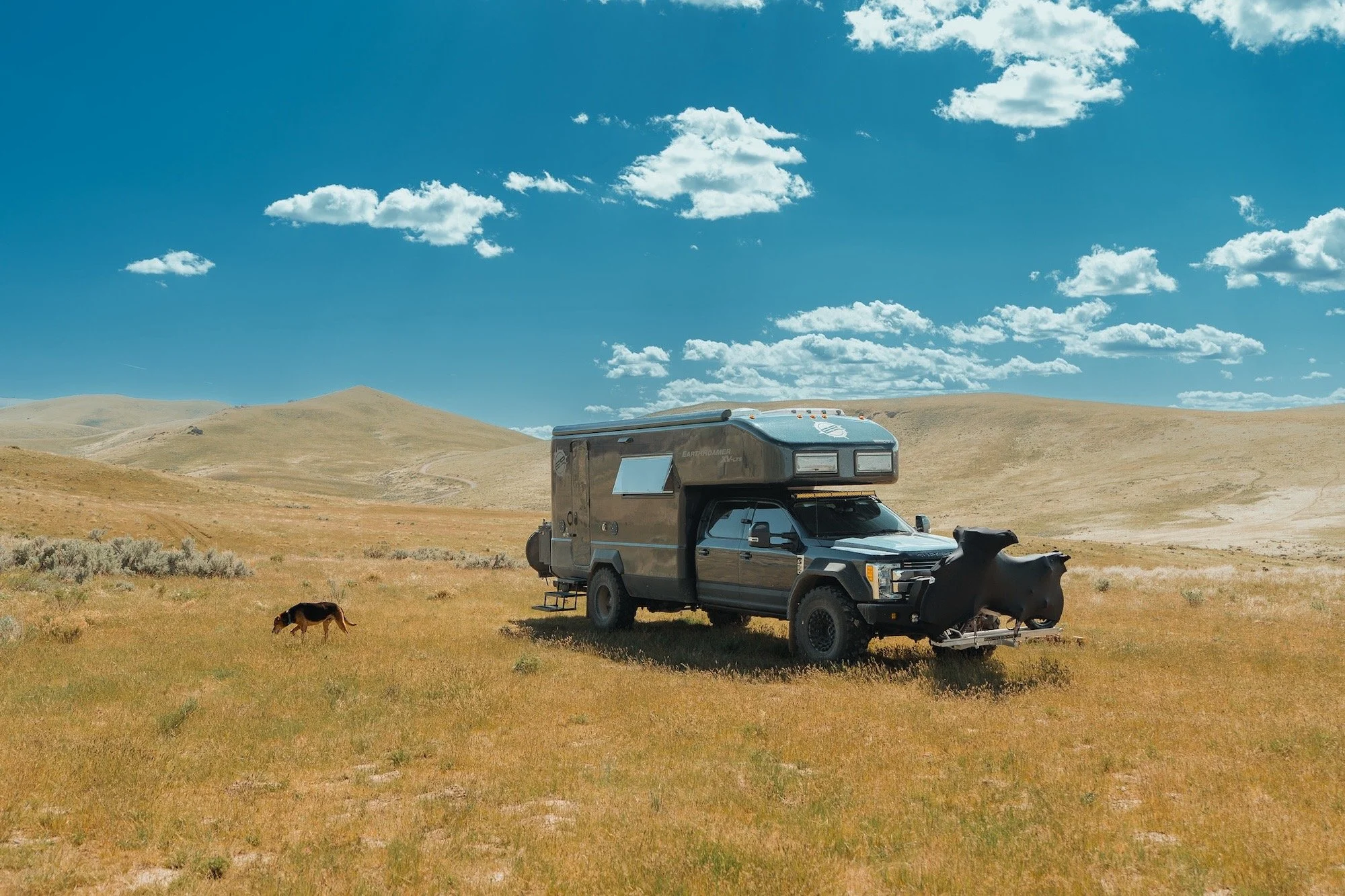
Deep into the trail, we hit a section of thick clay mud, the kind that fills your treads instantly and turns to grease. The EarthRoamer spun. It dug in. And at that moment, 11 miles from the nearest graded road, with sunset approaching, you start doing math on how long a shovel and a pile of rocks will take to get 20,000 pounds unstuck.
What We'd Do Differently
Pre-scout the jeep trail with a drone before committing. We relied on GPS tracks, but a 10-minute drone flight would have shown us the mud section and the rut geometry before we were in it.
Bring a second shovel. One shovel in clay is a single point of failure.
Give ourselves more daylight margin. 11 miles at 5 mph is over two hours — and that's without a recovery situation.
The Owyhee Canyonlands are worth the risk. But go prepared and respect the remoteness.